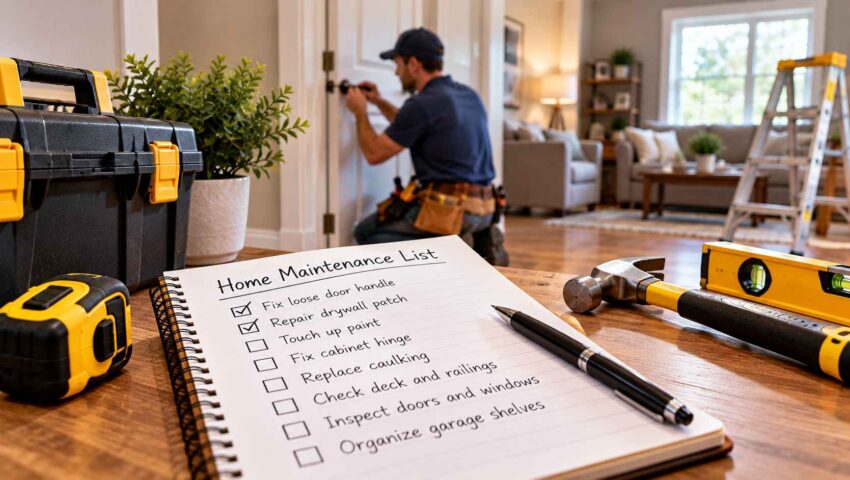
A home maintenance list can start innocently enough. A loose cabinet handle gets added to the notes app, a small drywall mark is put off until the weekend, and a sticking door becomes something everyone in the household simply works around.
Individually, these jobs may not seem important. The problem is what happens when several small repairs accumulate at the same time.
A growing list does not necessarily mean that something is seriously wrong with the home. It can simply mean that routine maintenance has been postponed long enough that it now deserves some organized attention.
Here are seven signs that your household repair list may be getting too long to ignore.
1. You Have Unfinished Repairs in Several Rooms
One of the clearest signs is when every room seems to have its own small project.
The bedroom may have a damaged section of trim. The hallway might have a wall that needs patching. A bathroom cabinet could have a loose hinge, while the basement has a door that no longer closes properly.
None of these jobs may be urgent on its own.
Together, however, they create a maintenance backlog.
When repairs are spread across several rooms, it becomes easy to forget what needs to be done. A room-by-room list can help turn vague concerns into specific tasks.
Walk through the home and record each issue. Do not worry about solving everything immediately. The first goal is simply to understand the size of the list.
2. You Have Started Working Around Problems
A minor repair becomes more noticeable when household members stop trying to fix it and simply adapt to it.
Maybe everyone knows which door needs an extra push before it closes. Perhaps a cabinet is never used because its damaged hinge makes it inconvenient. A loose piece of trim has become something people automatically avoid touching.
These workarounds can make a repair seem less important because the household has adjusted to it.
That does not necessarily mean the issue is getting worse. It simply means the inconvenience has become normal.
When you notice that people are regularly changing how they use part of the home because something is not working properly, it is worth adding the issue back to the maintenance priority list.
3. Small Repairs Keep Getting Postponed
Another warning sign is having the same task on your list month after month.
The reason may be simple: there is always something else to do.
Homeowners often postpone small repairs because they require a particular tool, material, amount of preparation, or block of uninterrupted time. A five-minute repair can become a month-long project when the homeowner never has the right conditions to complete it.
Look at your maintenance notes and ask how long each item has been sitting there.
If several tasks have survived multiple weekends, it may be time to stop treating them as temporary chores and schedule them properly.
That might mean setting aside a dedicated maintenance day, purchasing the necessary materials in advance, or deciding which jobs should be handled by someone with the appropriate skills.
4. Doors, Cabinets and Hardware Are No Longer Working Smoothly
Household hardware receives constant use, which makes it a common source of minor maintenance issues.
Doors may start rubbing against their frames. Hinges can become loose. Cabinet doors may sit unevenly. Handles can loosen or catches may stop working as they once did.
These problems are often easy to notice because they affect something people use every day.
Not every issue requires immediate intervention, but a collection of them can indicate that the home is due for a general maintenance review.
It is also important not to force hardware that appears damaged or improperly aligned. Repeated force can sometimes make a small problem worse.
Where the cause is unclear, getting the issue assessed may be more sensible than repeatedly adjusting the same component.
5. Cosmetic Damage Is Starting to Accumulate
Homes naturally develop cosmetic wear.
Paint gets marked, walls receive dents, baseboards become scuffed, and small sections of trim can become damaged through everyday activity.
A single mark is rarely worth worrying about.
The situation changes when several areas throughout the house need attention.
At that point, homeowners may find themselves looking at a growing collection of small finishing jobs: patch the wall, repair the trim, touch up the paint, replace a damaged section, fix a loose piece of moulding.
This is a good example of why grouping repairs can be useful.
Rather than treating every small defect as a separate project, create one finishing-maintenance list and decide which tasks can reasonably be completed together.
6. Seasonal Maintenance Is Falling Behind
A long repair list can eventually interfere with seasonal maintenance.
For homeowners in Ottawa, changing seasons provide natural opportunities to review different areas of the home.
After winter, exterior doors, trim, steps, railings, caulking, and other exposed areas may deserve attention. Before winter, homeowners may want to address visible exterior wear and complete appropriate preparation tasks.
If seasonal checks keep getting postponed because the existing repair list is already too long, that is a useful signal.
The solution does not have to be completing everything at once.
Instead, separate seasonal priorities from routine cosmetic work. Tasks that relate to safety, active moisture, significant damage, or preparing the home for changing weather can generally be considered before lower-priority appearance-related work.
7. You Have Several Unrelated Jobs That Need Different Tools or Skills
Sometimes the biggest sign that a maintenance list has become difficult is the variety of jobs on it.
You might have a drywall repair in one room, a door adjustment in another, damaged trim in the hallway, shelving that needs attention, and several small finishing jobs around the house.
Each task may require different materials, tools, preparation, and skills.
This is where repeatedly postponing repairs can become inefficient.
When several unrelated repair tasks begin accumulating around the house, professional home repair help in Ottawa can be a practical option for homeowners who do not have the time, tools, or experience to work through everything themselves. professional home repair help in Ottawa
The objective is not to turn every household maintenance issue into a professional project. It is to recognize when the number or variety of tasks makes it difficult to manage the list efficiently.
Turn the Long List Into a Shorter Priority List
Once you realize the maintenance list has grown too long, the next step is not necessarily to start working immediately.
First, sort it.
A simple three-level system can help:
Needs attention soon: Issues involving safety, active water damage, significant deterioration, or important household functions.
Schedule when practical: Repairs that affect convenience or normal use but are not urgent.
Cosmetic: Appearance-related improvements that can wait until time and budget allow.
This approach makes the list less intimidating.
It also prevents a cosmetic repair from receiving the same priority as an issue that could potentially cause further damage.
Group Jobs by Location
Another useful strategy is to organize the list by room or area.
If several tasks are needed in the same room, it may be more efficient to plan them together.
For example, a homeowner might combine minor wall repairs, trim work, hardware adjustments, and other finishing tasks in one maintenance session.
Grouping jobs can reduce the amount of preparation required and make it easier to see what a particular room actually needs.
The same principle can apply to exterior maintenance.
Instead of addressing one small outdoor issue and then returning to the same area weeks later, review the surrounding area and identify other reasonable maintenance needs.
Know When a Repair Requires Specialized Help
Not every item on a maintenance list should become a DIY project.
Basic tasks may be appropriate for homeowners who have the right knowledge and tools. Other work can involve significant safety considerations or specialized requirements.
Electrical systems, gas-related work, structural modifications, complex plumbing, and certain heating or ventilation issues should be approached carefully and handled by appropriately qualified professionals where required.
The same caution applies when a visible problem may be a symptom of something more serious.
A ceiling stain, for example, may look like a painting issue, but if moisture is still entering the area, covering the stain will not solve the source.
Knowing the limits of a repair is part of good maintenance planning.
Build a Maintenance Routine Instead of Waiting for a Backlog
Once the current list has been reduced, the goal should be to prevent another large backlog from developing.
That does not require a complicated home-management system.
A simple seasonal walkthrough can be enough.
Every few months, move through the house and look for changes. Check doors, hardware, walls, trim, caulking, visible exterior areas, and other parts of the home that receive regular use.
Record problems while they are still small.
Then decide whether each item should be monitored, scheduled, or addressed promptly.
This creates a repeating cycle of noticing, prioritizing, and maintaining rather than waiting until several months of postponed work have accumulated.
Make Maintenance Manageable
A long home maintenance list can feel overwhelming because every unfinished task is competing for attention.
The solution is not necessarily to fix everything immediately.
Start by identifying what has accumulated, separate urgent concerns from routine and cosmetic work, and group related jobs wherever practical.
Pay particular attention to repairs that affect how the household uses the home or that may require specialized knowledge.
Most importantly, avoid treating every minor imperfection as an emergency. Homes naturally show signs of use, and not every scratch, loose handle, or cosmetic defect needs immediate attention.
The purpose of a maintenance plan is simply to keep small responsibilities visible and manageable.
When homeowners regularly review the condition of their property and deal with reasonable repairs at the right time, maintenance becomes a routine part of homeownership rather than a constantly growing list of unfinished jobs.